WORK / Lull
Lull
CLIENT
Lull
YEAR
2026
SERVICES
Product Design, Digital Design, Branding
DURATION
3 months
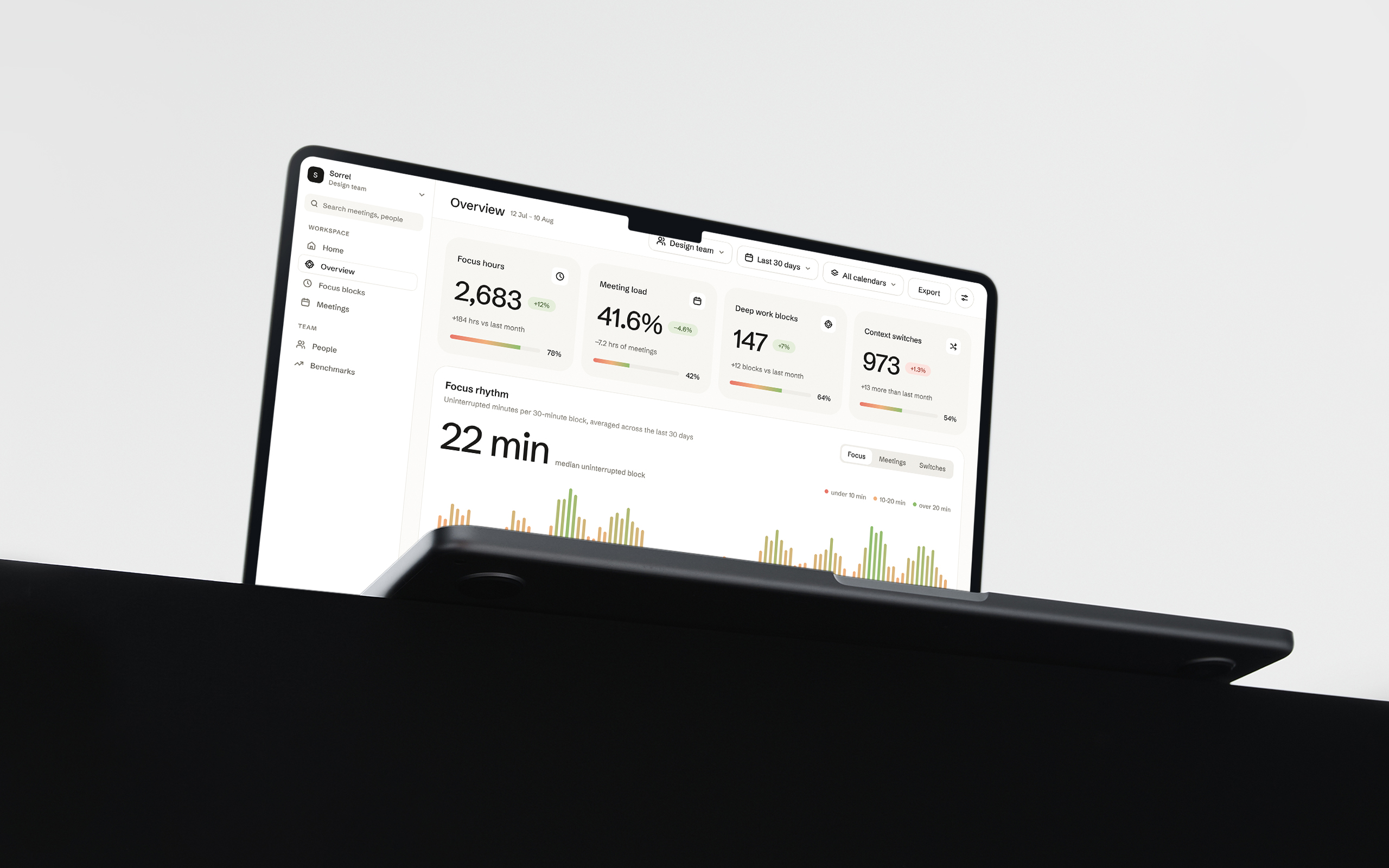
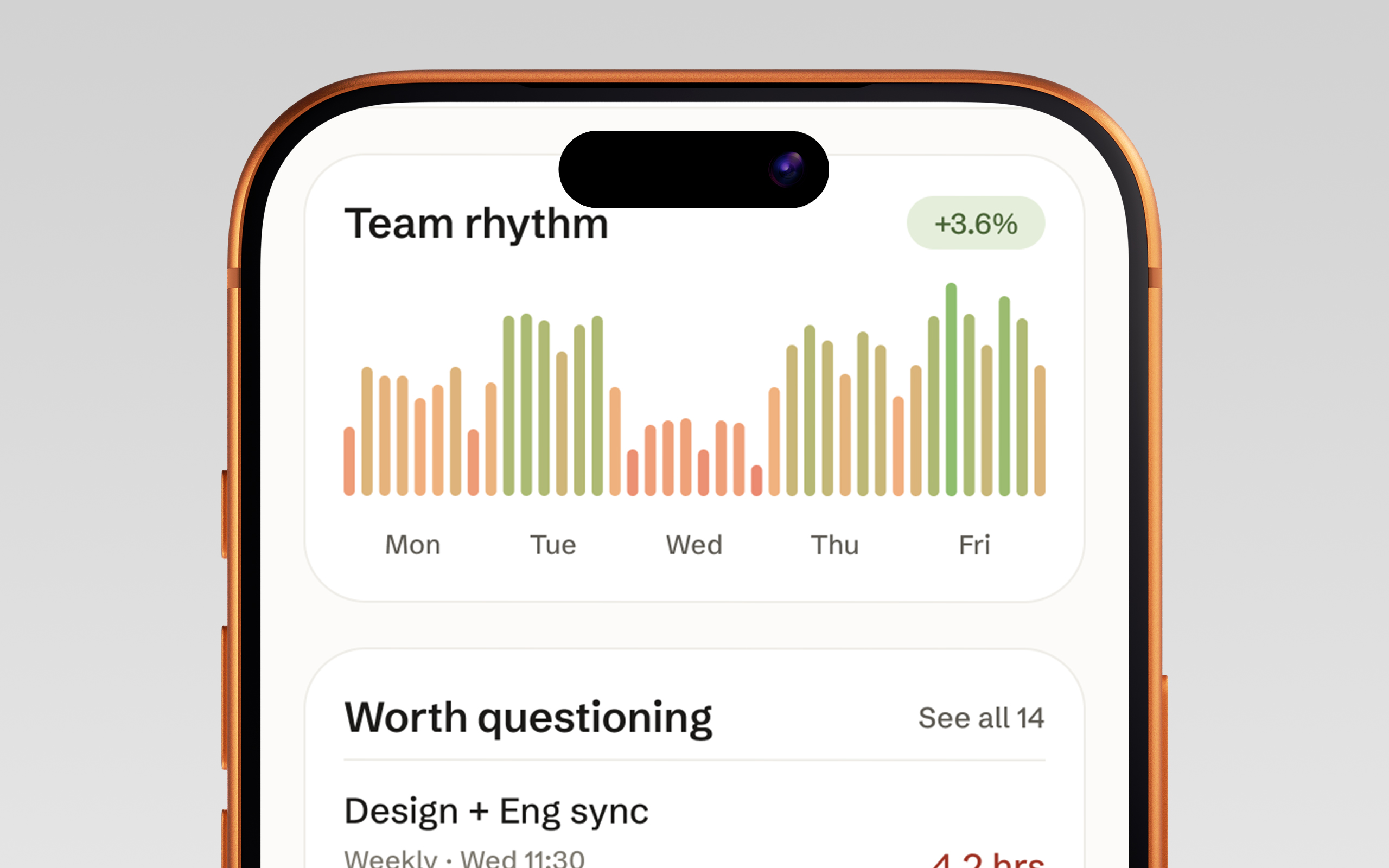
Lull is calendar analytics for teams, reading focus time, meeting load, and context switching straight from the calendar they already keep, then ranking which recurring meetings actually cost the team hours. Customers are managers and ops leads who need to know which meeting is worth cutting, not just that the week felt busy.
PROBLEM
A percentage says busy, not which meeting
A meeting-load percentage says a team is busy. It doesn't say which of the fourteen recurring calls on its calendar is the reason, or that moving one ten-minute conflict would hand back most of a lost afternoon.
- A meeting-load percentage says the week was busy, not which meeting made it that way
- Recurring meetings compound quietly, a sync that splits a day in two looks identical to any other hour on the grid
- Deep work got scheduled and then treated the same whether it survived the day intact or was overwritten by the next invite
- Every calendar tool showed the invites; none of them ranked which ones were actually worth cutting
APPROACH
Rank the meeting, not the average
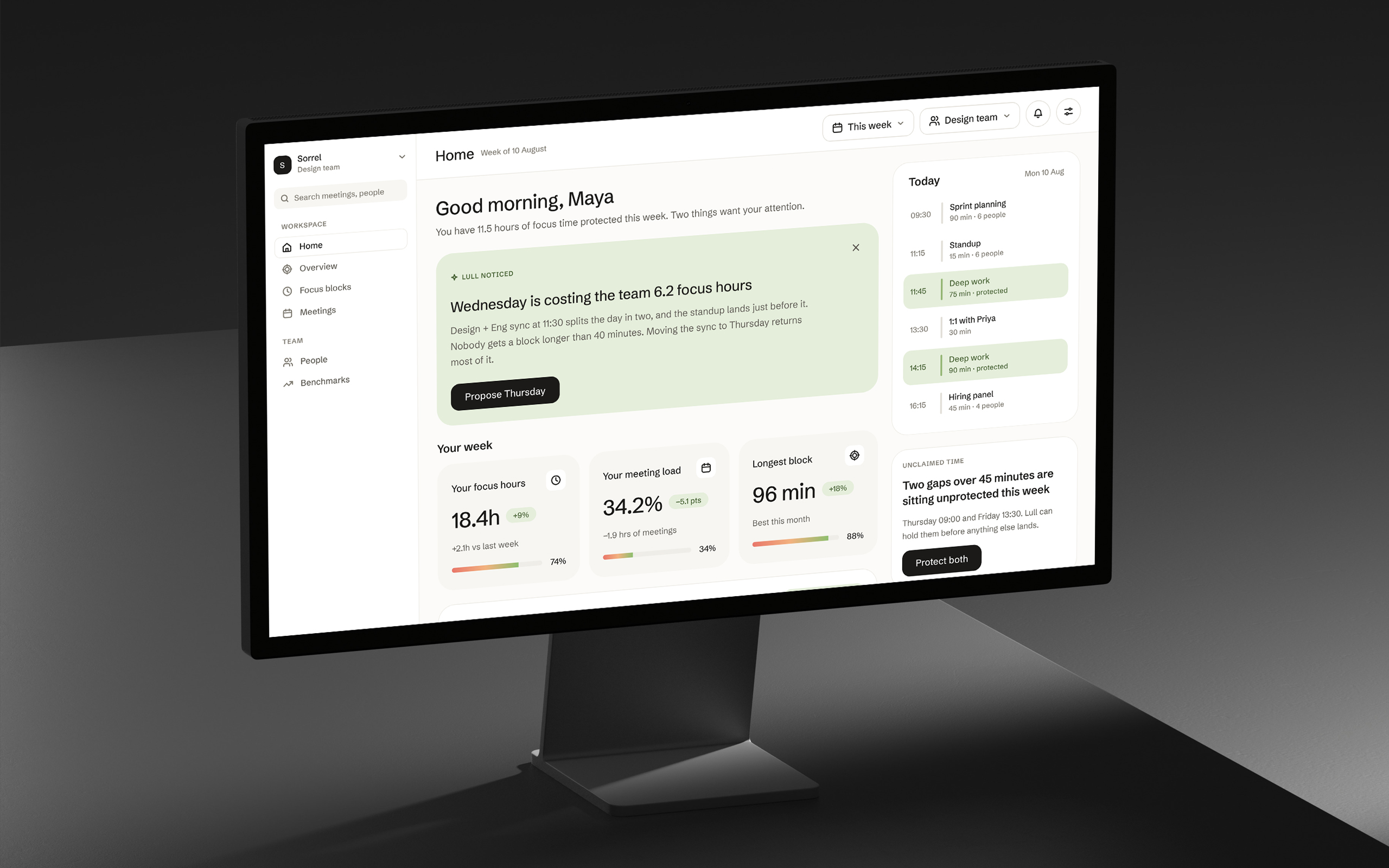
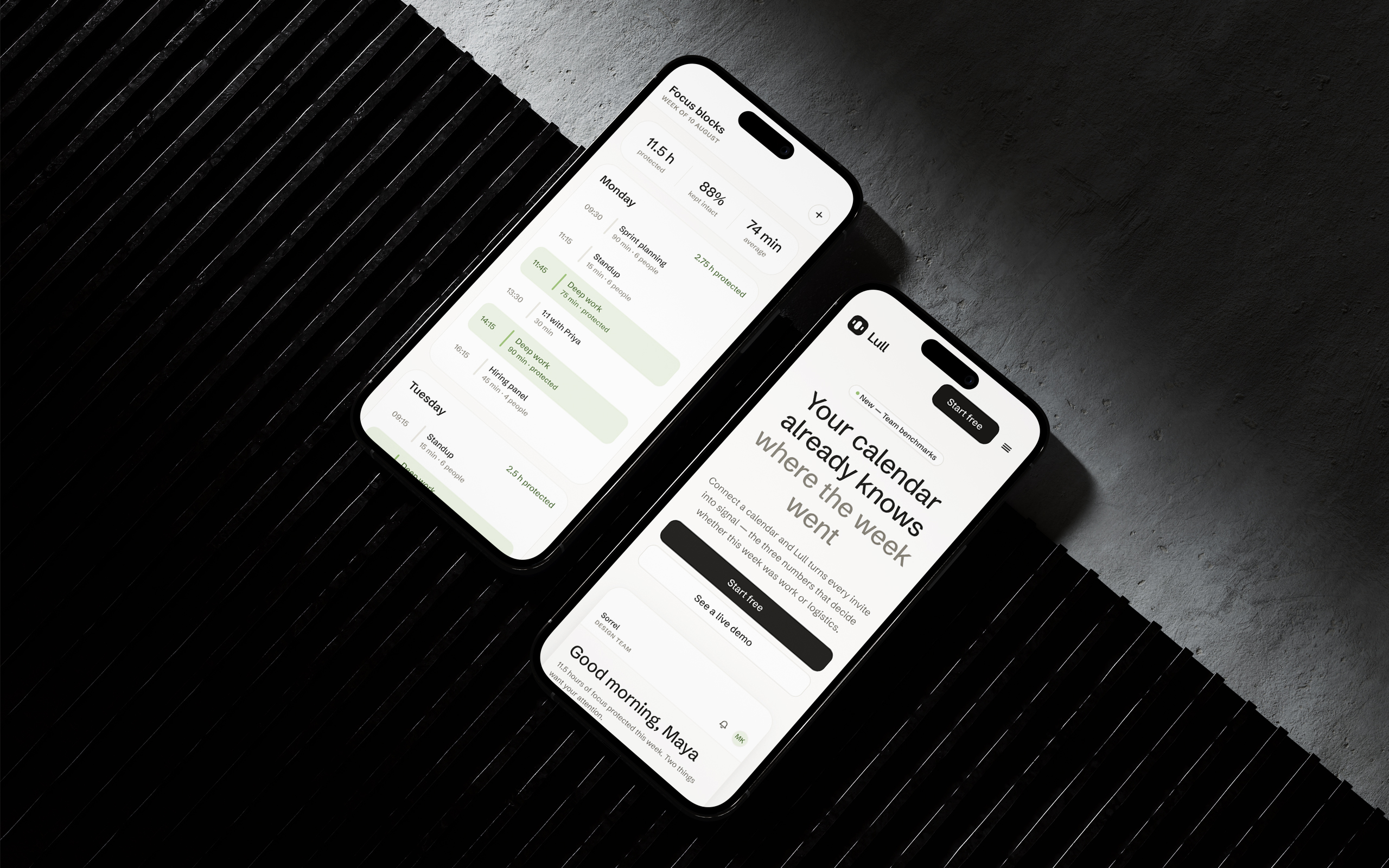
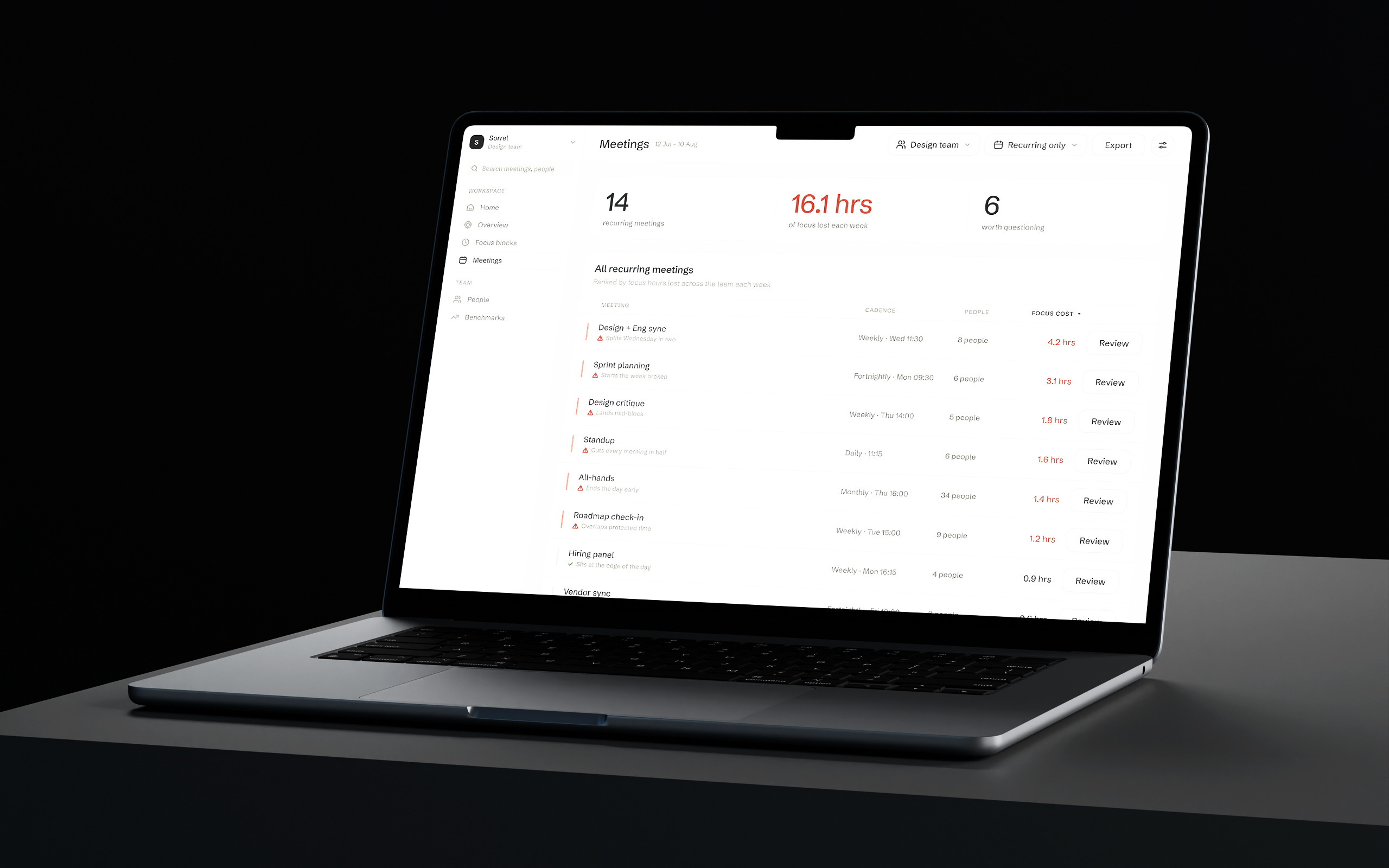
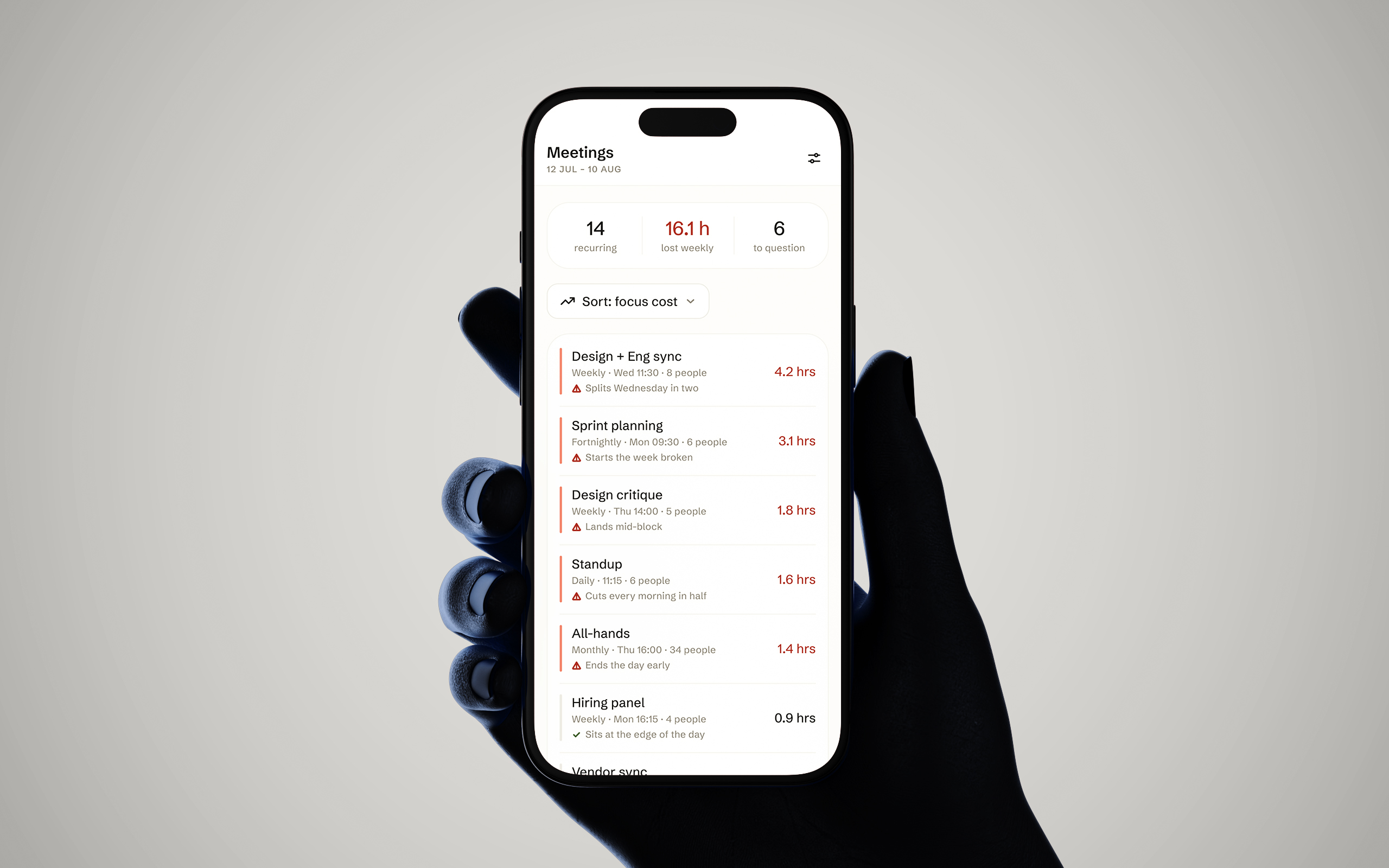
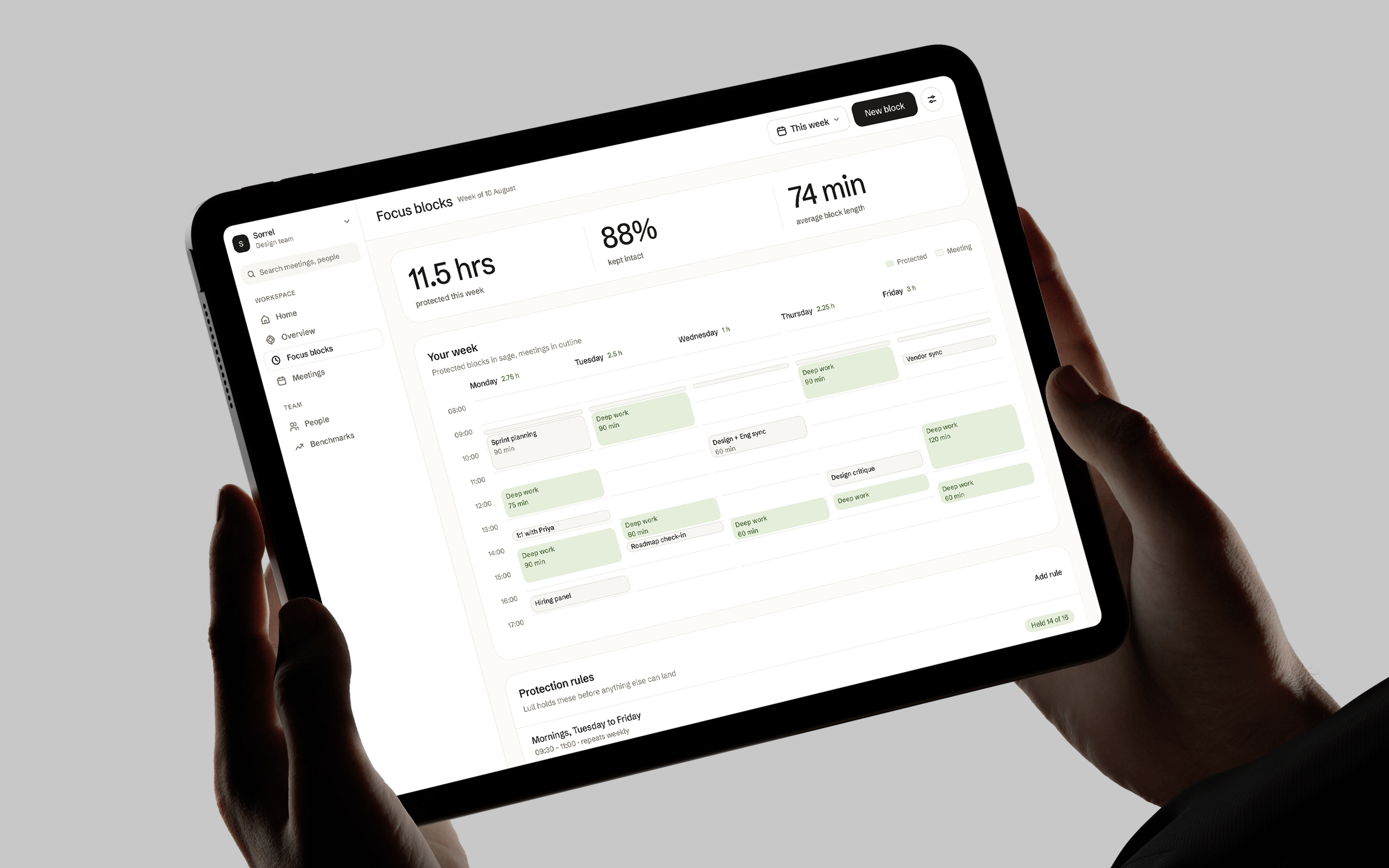
Every dashboard we looked at led with an aggregate, a meeting-load percentage or a focus-hours total, and stopped there. Lull instead walks a team's recurring meetings and assigns each one a focus cost and a plain diagnosis, splits Wednesday in two, starts the week broken, lands mid-block, so the meeting worth killing sits at the top of the list instead of buried in a grid. Protected time needed the same clarity. Deep work blocks render in sage, meetings in outline, on the calendar and nowhere else, so a block is either held or it isn't. Protection rules run underneath, mornings Tuesday to Friday, so Lull can hold a slot before anything else lands rather than negotiate for it afterward. The phone app was scoped to the two things worth doing away from a desk, checking what got protected and questioning what didn't, not a smaller copy of the dashboard.
IMPACT
From a percentage, to a name
3.4×
Longer average deep-work block once meetings were ranked and mornings protected, up from 22 minutes
88%
Of protected focus blocks held intact once flagged, instead of quietly overwritten by the next invite
100%
Of the protected-versus-meeting distinction rendered from one shared token, on desktop, tablet, and phone
A meeting load of 34% doesn't say anything on its own. Ranked by focus cost, it resolves into fourteen recurring meetings costing the team 16.1 hours a week, with one call, a design and engineering sync at 11:30 on Wednesdays, responsible for 4.2 of those hours because it splits the day into two blocks too short for real work. Moving it recovers most of a 6.2-hour weekly loss without touching another meeting on the calendar. Because deep work and meetings render from the same two tokens everywhere the calendar shows up, a team member checking a phone between meetings sees the identical distinction an ops lead sees on the dashboard, protected time in sage, everything else in outline. Average uninterrupted focus grew from 22 minutes to 74, and 88 percent of blocks held once flagged, instead of being quietly claimed by the next invite.